Support for overseas rescue dogs and their guardians
.png)
Breed & genetics
If you are adopting a dog from overseas, you may be given a breed or mix of breeds to describe them.
Sometimes their breed mix may be known, but often the description is based on what they look like. For dogs who have lived on the streets, roamed freely or whose early history is unknown, their genetics may be completely unknown.
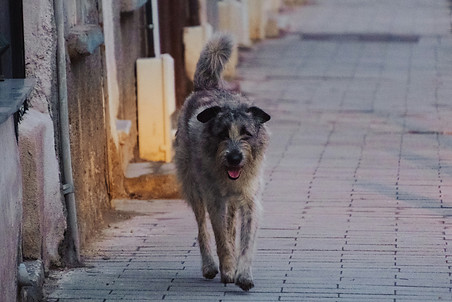
Former street dogs and breed ancestory
A former street dog is not a breed, and having lived on the streets does not tell us what a dog's personality will be like. Dogs living freely in towns, villages and rural areas may have very different backgrounds. Some may have previously lived in homes, others may have grown up around people without being owned, while some may have had relatively little direct human contact.
For some dogs, the story may go back much further than the individual dog you are adopting. They may have descended from generations of free living or free roaming dogs whose survival and reproduction took place with relatively little selection by people. In these environments, certain characteristics may have been necessary for survival. Being aware of changes in the environment, responding quickly to potential threats, finding food, navigating interactions with other dogs and deciding when to approach or avoid people can all influence a dog's chances of survival. This may help us understand why some dogs from long- established free living populations can appear particularly alert to their surroundings, cautious about unfamiliar situations or more inclined to make decisions independently of people.
A puppy adopted at only a few months old may still bring genetic tendencies shaped by the population they came from.
Livestock Guardian Dogs and their crosses

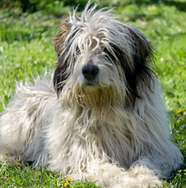

Dogs found in rural areas in countries such as Italy, Greece, Romania and other parts of Europe, may have livestock guardian dog ancestry. A 2024 genomic study of livestock guardian dogs identified shared ancestry and historical gene flow between guardian breeds and free ranging dogs, suggesting that dogs coming from rural areas where livestock guardians and free roaming dogs live alongside one another may have guardian ancestry, even if they do not resemble a recognised guardian breed.
Livestock guardian dogs, often referred to as LGDs, include breeds such as the the Maremma Sheepdog, the Myoritic Shepherd, the Spanish Mastiff and and the Anatolian Shepherd. They were traditionally used to protect sheep, goats and other livestock from predators.
Unlike herding dogs, whose work often involves responding closely to human direction, guardian dogs have been selected for a different purpose. Their role requires them to remain with livestock, monitor their surroundings, identify potential threats and respond without constant instruction from a person.
Over generations, selection for these functions has contributed to behavioural tendencies that may include independence, vigilance, territorial behaviour and caution towards unfamiliar animals or people.
These traits can create challenges when a dog is expected to live in a busy residential environment where unfamiliar people, dogs, delivery drivers and other disturbances are part of everyday life.
A dog naturally inclined to monitor and protect a particular area may respond differently to strangers entering their home than a dog who has been bred to be highly tolerant of social interaction with humans. This does not mean livestock guardian dogs are inherently aggressive. Managed the right way and with the right protocols in place, these traits do not mean LGD or LGD crosses cannot make wonderful companions in the right home environment.
Village dogs


Village dogs belong to populations that have lived and reproduced alongside human communities for generations, long before many of today’s recognised breeds existed.
Rather than being deliberately bred for a particular appearance or purpose, these populations have been shaped by their local environment, their relationship with people and the pressures of living and reproducing with relatively little human control. From finding food, to navigating relationships with other dogs, to deciding whether to approach or avoid people, these dogs have survived in environments that required them to be resourceful, independent and instinctive.
This does not mean every village dog will be cautious or highly alert. But it is important to recognise that they have not come from populations that were selectively bred and raised to respond to commands from people. Village dogs are often intelligent, independent thinkers, who form a very close bond with their trusted people.
Hunting dogs and their crosses


Across Europe, dogs such as Podencos, Galgos, Setters, Pointers and various hounds have histories of being selected for different hunting functions. Many are abandoned when no longer suitable for hunting and find themselves in the rescue system.
Your hunting breed mix may have been found on the street, but behind that individual dog may be generations of selective breeding for a very specific purpose.
Scent hound breeds, such as Griffons, the Segugio Italiano, and the Transylvanian Hound have been bred to track wildlife over long distances. The Podenco and the Galgo have been bred to pursue moving animals by sight, while Pointers, Setters and Spaniels have been bred to locate, flush or retrieve game. These different functions can influence what dogs notice, what they find rewarding and how they respond to their surroundings.
Many of these dogs can also be wonderfully affectionate, gentle and comical companions, and some have a long history of living or working alongside other dogs.
As with every breed group, genetics are not a guarantee when it comes to behavioural traits. Two dogs with similar ancestry can behave very differently. One Podenco may be intensely interested in wildlife while another barely notices it. One scent hound may struggle with recall while another stays naturally close to their person. But if the dog you are considering adopting was bred for behaviours that might require management from you, are you comfortable working with these behaviours rather than expecting them to disappear?
Genetics, epigenetics and fear
Why are some dogs naturally more cautious, sensitive or fearful than others?
When we meet a fearful rescue dog, it is easy to assume that something terrible must have happened to them. Sometimes difficult experiences are part of the explanation, but fear does not necessarily mean the dog has experienced a traumatic event before they came to you.
The way a dog responds to the world is shaped by a complex relationship between genetics, early development, experience and environment.
Can fear be genetic?
Yes. Research has shown that fearfulness has a genetic component in dogs. Just as dogs differ in their physical characteristics, they can inherit differences in temperament and sensitivity to their surroundings. Some dogs may be naturally more cautious, while others are more inclined to investigate unfamiliar people, objects or environments.
How Early Stress Can Shape Behaviour
A dog's early development is particularly important because the systems involved in responding to stress are still developing. The hypothalamic pituitary adrenal axis, or HPA axis, is one of the body's main systems for coordinating physiological responses to stress, helping to regulate hormones such as cortisol.
Experiences during early development can influence how these systems function and how a dog responds to challenges later in life. Research involving thousands of dogs has found associations between adverse experiences during the first six months of life and increased fearfulness in adulthood, although this does not mean that every puppy exposed to these experiences will grow up to be fearful.
Can fear be passed down through generations?
A puppy does not need to have experienced abuse or a frightening event themselves to be naturally cautious. They may have inherited characteristics that make them more sensitive to unfamiliar people, environments, sounds or situations.
Maternal stress can also affect the hormones and placental processes involved in foetal development, potentially influencing the developing systems that later help puppies regulate and respond to stress. Again, this does not mean that a stressed mother will necessarily produce fearful puppies, but it is another way in which a puppy’s early development may influence how they experience the world later in life.
thinking about genetics and breed type gives us information, but this isn't the whole story...
I'm aware all of this can sound a little daunting. But understanding the influence of genetics does not mean that your dog's future has already been determined.
The dog you bring home will continue to learn about you and the world around them. Feeling safe, having choices and building a relationship with someone they can trust, will all shape how they respond to new experiences.
Still have questions?
A Pre Adoption Consultation is a chance to talk everything through. We can look at what the breed or background of the dog you are considering might tell us, and whether their needs could be a good fit for your home, lifestyle and expectations.
